
The Creative Work of Academic Thinking
A Guest Post by Verena Hutter, Ph.D.


Picture the paragraph you’ve been avoiding all week. The one with the argument that almost works but keeps slipping out from under you when you try to pin it down. You’ve rewritten the topic sentence four times. You’ve cut the middle section into a separate document so you can pretend it doesn’t exist. You’re starting to wonder if there’s a structural problem you can’t see, or worse, that you’re the structural problem.
A few months ago, I was sitting with a chapter that wouldn’t cooperate. I knew, more or less, what I wanted to say, but the structure kept refusing me, and I’d reached the stage where opening the document made my eye twitch and my shoulders would climb up to my ears. What eventually got me moving again wasn’t more outlining or another pass through the literature. It was something that, on the surface, looked like the opposite of serious work: a creative writing exercise. And honestly, I shouldn’t have been surprised, as I’d already been watching this play out in my own classroom for years.
Getting Creative
In my classes, I noticed that when students were given permission to play with language — a five-minute free-write before discussion, a prompt that let them argue a position from a character’s point of view — they later produced better academic writing. Other teachers made similar observations when introducing creative writing techniques into their classroom, and research on the topic seems to back me up as well. Indeed, in other fields, creative writing, or expressive writing has been readily embraced for a long time.
This is what I did: In Gillie Bolton and Stephen Rowland’s Inspirational Writing for Academic Publication, they suggest writing a letter to your “Writer Self”- the person who writes brilliant sentences, is easily in a state of flow, and always knows what’s happening next (a higher self for writers!). I did this, and let me tell you, I was very surprised. I was angry, I was upset with myself for being stuck in the first place, for not having figured out the structure of my chapter. The next part of the exercise is to write a letter back, as in taking on the voice of the Writer Self. I waited a day to do this, but then I did it, not to become magically unstuck, but to at least finish this exercise if I couldn’t make heads or tails of my chapter.
In this instance, my Writer Self sounded a lot like my mother during my childhood, when I’d argue back and forth about the necessity of my chores (make of that what you will, Sigmund Freud!). Just like my mother’s line ”the time you spent arguing could’ve been the time you spent doing the chore”—my writer self told me that all the energy I was spending being mad at myself could’ve gone toward finding a solution. I was only hurting myself here. It still took me a while to figure out where I wanted my chapter to go, but I was in a much better headspace, and once I had figured it out, I just wrote it.
The Research
As I mentioned before, you don’t have to take my word for it; plenty of research backs me up.
In 1986, James W. Pennebaker and Sandra K. Beall ran a study in which they asked 46 students to write about traumatic or emotionally difficult experiences for 15-20 minutes, for four consecutive days. While the writing process itself was stressful (participants had a higher blood pressure), they took fewer trips to the doctor or health center in the following six months. This study has since been replicated over 100 times, exploring a variety of variables- physiological responses, GPA averages, absenteeism at work. Also interesting is Kitty Klein and Adriel Boals’ 2001 study, which showed that expressive writing reduces intrusive and avoidant thoughts, which frees up working memory, and correlates with (not causes!) higher GPAs.
So all of this to say: The mental noise we’re suppressing while trying to write takes up cognitive real estate. Low-stakes writing, whether journaling, free-writing, or prompted exercises, offloads it.
There’s also a second body of research worth knowing about, this one from neuroscience. Meet the default mode network (DMN): the brain network that activates when you’re daydreaming, mind-wandering, or letting a thought drift sideways. Early researchers dismissed it as the brain’s idle mode, what it’s doing when it isn’t doing anything important. We now know that was backwards. The DMN is central to creative idea generation, especially divergent thinking: the capacity to make novel connections between ideas that don’t obviously belong together (Beaty et al., 2014). And in 2022, Ben Shofty and a team of neurosurgeons demonstrated this causally, using direct cortical stimulation during awake brain surgery to temporarily disrupt the DMN (sounds painful!). Creative responses dropped.
Keeping The Spark Alive
The implication for academic writers is uncomfortable. Argumentative prose keeps our executive control network firmly in charge. But the associative leaps that make a scholarly argument actually interesting, an unexpected connection, or an elegant framework, come from the very network we’ve been trained to override. We stay in the gear that kills the spark.
So the research has been out there for a while. Why isn’t it more common to use creative writing techniques? It’s becoming more common, I think, but the root of the resistance can be found in the scarcity mindset that is so commonplace: We already have so little time between all the tasks we juggle every day, sitting down to play with words seems like a frivolous luxury we can’t afford. But I encourage you to view it from a different angle: If your book project is stalled, if you find yourself frustrated and cranky all the time, or worse, nearing burnout, you’re paying in other ways.
How to Leverage Creativity
I already described Bolton and Rowland’s letter to your Writer Self above, but let me give you some more ways to start.
Tip 1: Focused freewriting on your scholarly problem
This is a technique Peter Elbow pioneered, he literally calls it “exercising the writing muscle.” Set your time for 10 minutes (six if 10 minutes seems too long at first) and do a freewrite on your topic. No stopping, no editing, no worries about correctness. This forces writing (producing) and editing into separate processes, and quiets the internal critic. And just like a little gold nugget covered by river rocks and mud, your argument starts to glint through. I have found this technique to be especially powerful with L2 academics, who often are wrestling with the fear of not sounding like a native English speaker.
Tip 2: Change the genre of your argument
As someone who was trained as a literary scholar, I find this to be an especially fun one. Write your thesis/article/ book chapter as a letter to a friend. Write a eulogy for the idea that you’re arguing against. A haiku or a sonnet (here you have the added challenge of brevity!). Genre-switching forces associative thinking, and pulls you out of the formal register you’ve been thinking in. It may feel silly or even like dumbing down your work, but it also can be where you discover why you care about your research in the first place..
Tip 3: Permission-to-write-badly drafting
This is a version of Elbow’s freewrite exercise. Set your timer, and try to write as badly as you can on purpose- what Anne Lamott famously calls “the shitty first draft.” I once did this with a paragraph that I was deeply unhappy with. Instead of trying to improve it, I tried to make it worse. Instead of trying to shorten it to an acceptable length, I tried to make it longer- and as I did this, I realized how many redundant sentences I had in the original paragraph. Perfectionism increases anxiety and narrows cognitive focus; we cannot see the forest for the trees, which then increases stress and anxiety again. Lowering the bar interrupts that cycle.
In my classroom, creative assignments have become a staple. My students, given permission to play, write better academic prose, and they have more fun doing it. I want to pass that permission along.
The next time you’re staring at a stuck paragraph or avoiding a chapter that has somehow become radioactive, try one of these strategies. Not because it will solve the structural problem (it might not, at least not right away), but because the version of you that writes well is probably waiting on the other side of a little play.
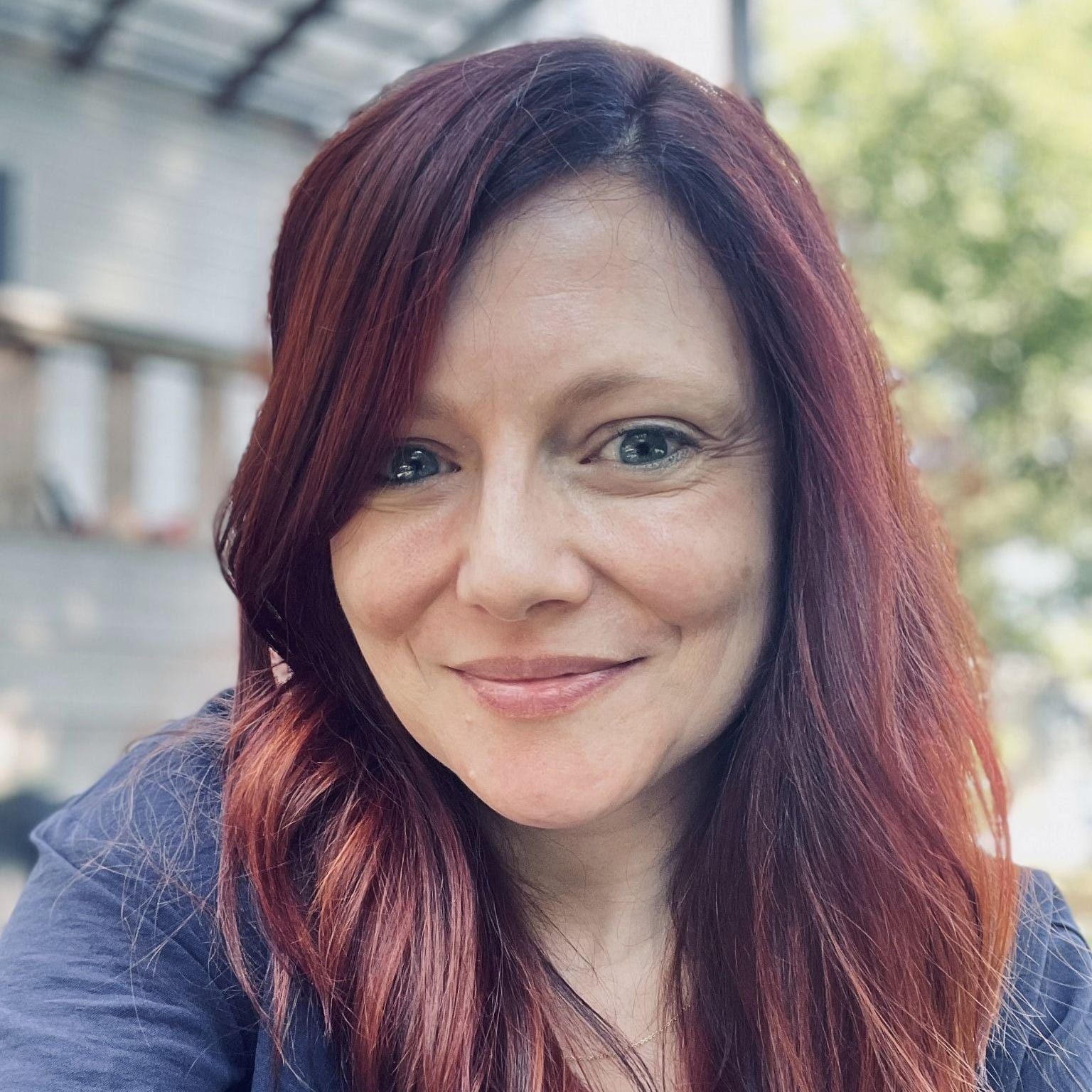
Verena Hutter is a writer, editor, and writing coach for academics and non-fiction writers. A former German Studies scholar, she founded WIP Writing to offer developmental editing, coaching, and retreats for writers navigating the long middle of a project. She teaches at the University of Portland and writes the WIP Writing Substack on the joys and pitfalls of writing, researching and reading. She is the author of This Is a Book for People Who Love Tattoos (Running Press/Hachette).
Find Verena at wipwriting.com or subscribe to her Substack:
 | A guest post by
|
I’m an ex-academic and the “shitty first draft” has served me incredibly well when it comes to writing.