
Using My Weeding Strategies to Write Your Book
Strategies for those of us who have a tough time getting started.

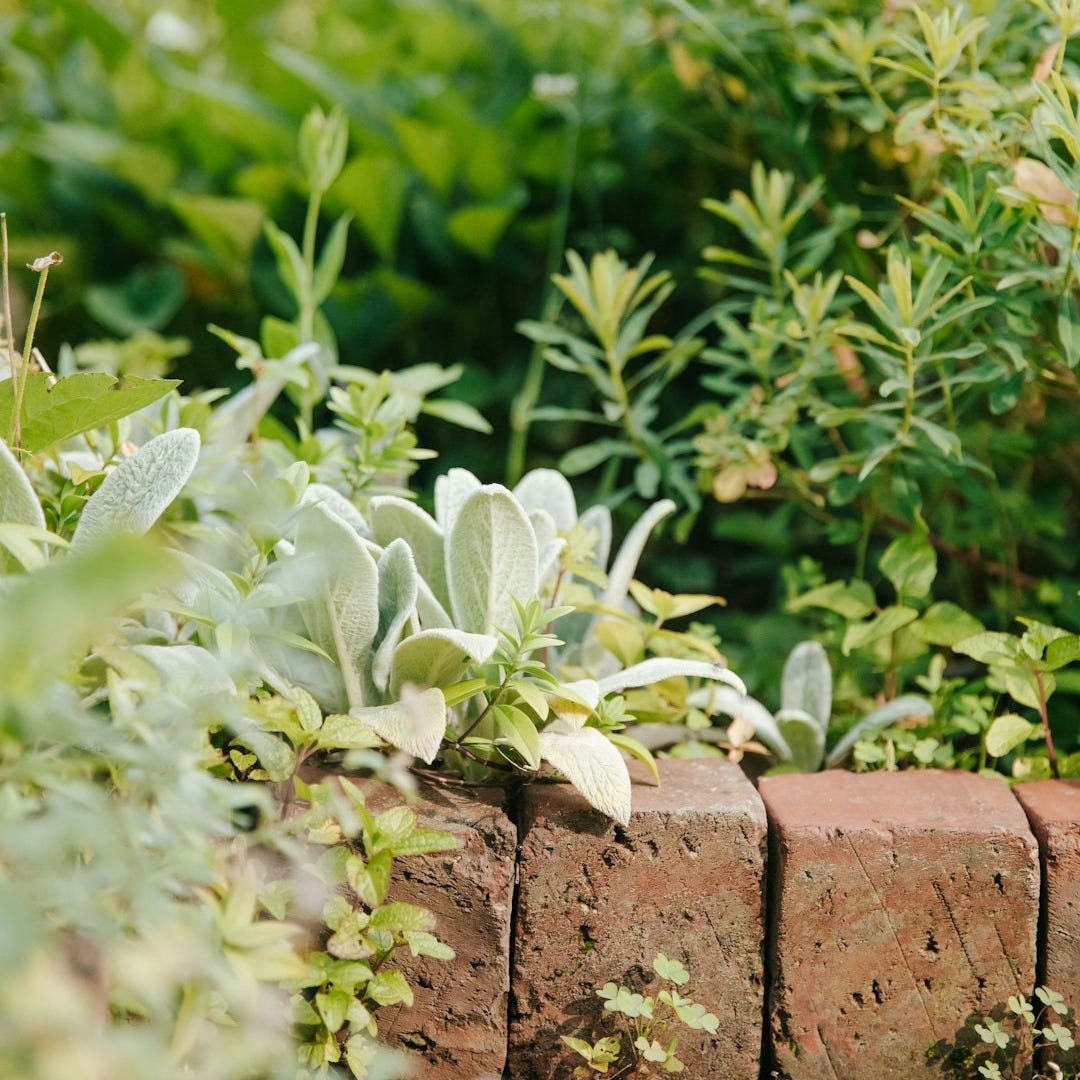
My partner and I bought a house this summer (yay!) and inherited the legacy of the beautiful Dutch garden that is our backyard. I have a decidedly black thumb, yet I feel a sense of duty to our tiny garden paradise. It’s overgrown, but in a delightful sort of way that makes it feel like we’re leaving it unkept deliberately, even if that’s only a partial truth.
Despite having fully embraced an untamed aesthetic, the weeds that grow up between the pavers are an eyesore. There is something about the ordered paverstones intermixed with random weeds that makes my brain hurt. Plus, I’d much prefer to have full grass to mow all at once rather than those tenacious little demons that fight to the death when I try to pull them out.
Because weeding is not something I find particularly enjoyable, I don’t stay on top of this chore on a daily or weekly basis and instead prefer to let them become so obnoxious for weeks or months before I break down and finally do something about it. This usually means spending hours on my Sundays vanquishing my foes.
If you have ADHD, autism, OCD, or other types of neurospicy brains, you’ll recognize the familiar cycle: avoidance when a task feels too overwhelming to start, and then tackling it with gusto once enough guilt has built up to properly compel you to do something about it. Task initiation is the executive function that allows you to move from knowing a task needs to be done to actually beginning. And for some of us, it’s harder to do if the task isn’t novel, pleasurable, predictable, urgent, or engaging.
My experience of weeding my garden has a lot in common with making progress on our academic work for many of us.
If your book project produces feelings like overwhelm, imposterism, confusion, or any other matter of negative emotion, then just opening the document (or most likely, documents) can feel herculean.
Tasks that we perceive as unpleasant or difficult are the things we want to avoid. This is true for many humans, but even more so if you have ADHD and you can’t count on dopamine unless the task is stimulating, novel, or urgent. And when it feels like there’s so much to do that we don’t even know where to start, that avoidance becomes like armor to protect us from the difficult thing.
The strategies I’ve developed for weeding my garden also have currency for academic writers. Here’s a set of things you might try if you’re seeing yourself in my adventures in weeding.
Pair the task with something enjoyable.
I like listening to podcasts or audiobooks when I’m working in the garden. Getting to do something I genuinely enjoy while doing something I don’t helps make the task seem less daunting.
In graduate school, I used to eat candy while writing seminar papers. It wasn’t the healthiest of habits, and I eventually had to curtail that method. But it illustrates the idea of giving your brain something sweet while it works on something it perceives as sour.
Things you might try that are healthier include listening to music, going to that quaint little cafe with the great coffee, or working from a park picnic table instead of your desk for a change of scenery. Pairing the hard thing with the enjoyable thing can do wonders.
Break the task into smaller parts.
If I think about my garden as something I have to weed in one go, it works as a deterrent for ever starting at all. Similarly, if you mark “write the book” on your to-do list, it’s very daunting to attempt just that.
For the garden, I think about it in sections. Right now, all I have to do is weed that one section in the corner by the gate. Thinking about that one section makes it much easier to get started because I don't have to deal with the emotional weight of fighting all of those little bastards at once.
Writing your book is much easier to tackle in discrete sections as well. If you haven’t worked on it in a while, it could be as simple as rereading the draft or your diary about the project. If you’re picking back up the next day, it could be starting by reviewing yesterday’s diary entry about what you did on the project last and writing one sloppy paragraph. Read more here about breaking projects into smaller parts.
Set a timer.
When your bodyguard doesn’t want to permit you to write today, setting a timer and telling yourself you only have to do the task for a short amount of time can help.
I sometimes tell myself that I only have to weed for 15 minutes, and then I set a timer and just do it. Knowing that I’m not committing much energy to it makes it easier to start, and most of the time I go for longer.
I give this same advice to writers who have trouble getting started. Set your pomodoro timer for 15 minutes and remind yourself that all you need to do is write for a very short period of time. If you’re anything like me, 9/10 times I choose to write longer because getting started was the barrier, and once I broke the dam, ideas flowed more freely again.
Co-Working
One of the best strategies for getting garden work done is doing it with my partner. She often initiates it (because I avoid it like the plague), so I don’t have to spend any mental energy deciding to do it; she takes care of that. Similarly, many folks, particularly those of us with challenges around task initiation, find that co-working is a helpful strategy for showing up for writing.
When you’re working alone, your brain has to muster enough of its own signals to prove that the task is worth starting. The problem with this approach is that if the work doesn’t feel engaging, urgent, or enjoyable at all, it’s difficult to muster that activation. Coworking, on the other hand, sidesteps this issue by externalizing activation by utilizing another person’s presence and momentum to spark your own when it’s not available to you otherwise.
The Advanced Strategies
The advanced version of the strategies I've listed here is retraining your brain to believe that the task is actually enjoyable, as well as developing a routine so that you don't have to rely on mustering activation constantly.
I haven’t achieved this level yet with weeding, as evidenced by my tendency to describe innocent little plant life as antagonists when really they are making their way in the world just like the rest of us.
Fortunately, I worked through the weight of learning to write as an academic and reclaimed my enjoyment of it. For example,
I began to see my writing sessions as something more mundane and routine than showstopping, which lessens the barrier to entry. Read more.
I began to reframe “writing” as a thinking practice, one that doesn’t need to be fully developed in early drafts. In fact, those drafts are for experimenting and playing with ideas for myself and not for others yet. That makes writing much more enjoyable for me. Read more.
I began to realize that the novelty of arguments doesn’t come from leaps that advance knowledge production by light-years, but from the nuance we bring to existing conversations. Read more.
I began to understand perfectionism and imposterism as structural issues that we use as a form of self-protection. Understanding what I’m protecting myself from is key to lessening the hold those structures have on my writerly self-esteem. Read more here and here.
All of this work, of course, is slower, can’t be done with a 15-minute timer, and requires retraining neuropathways. And it’s also just the type of work we do together in my writing coaching programs.
In the end, the moral of the story is that if you’re avoiding the one big, daunting task like writing your book, then you have to find ways to make it loom less large in your mind and associate it with things that are enjoyable.
Somewhere along the way, you too might realize that you misjudged those poor, intrepid bastards who live in the backyard of your mind and reframe how you think about writing itself.